How To Create a Winning Affiliate Marketing Strategy
Created an outstanding product or service, but need more exposure so people can learn about it? Fighting for your place under the sun and want to ease your routines? Everything you need is to tap into affiliate marketing, a surefire way to boost your lead generation and conversion rates.
In practice, this means enrolling in an affiliate marketing network – if you want access to hundreds of content creators who can potentially promote your products – or running an affiliate marketing program independently.
In this blog post, we walk you through the ins and outs of affiliate marketing.
What Is Affiliate Marketing
Affiliate marketing is when a company—an advertiser—uses a performance-based digital marketing strategy to pay affiliates—also known as publishers or content creators—for sales generated from promoting this company’s products or services. The payouts come as a commission on the sale or a flat fee per click or lead.
Affiliate marketing is a powerful acquisition strategy because it doesn’t take any effort to equip well-chosen affiliates and influencers to sell your products and services at a reasonable fee. This way, you can save on paid advertising campaigns and lead nurturing.
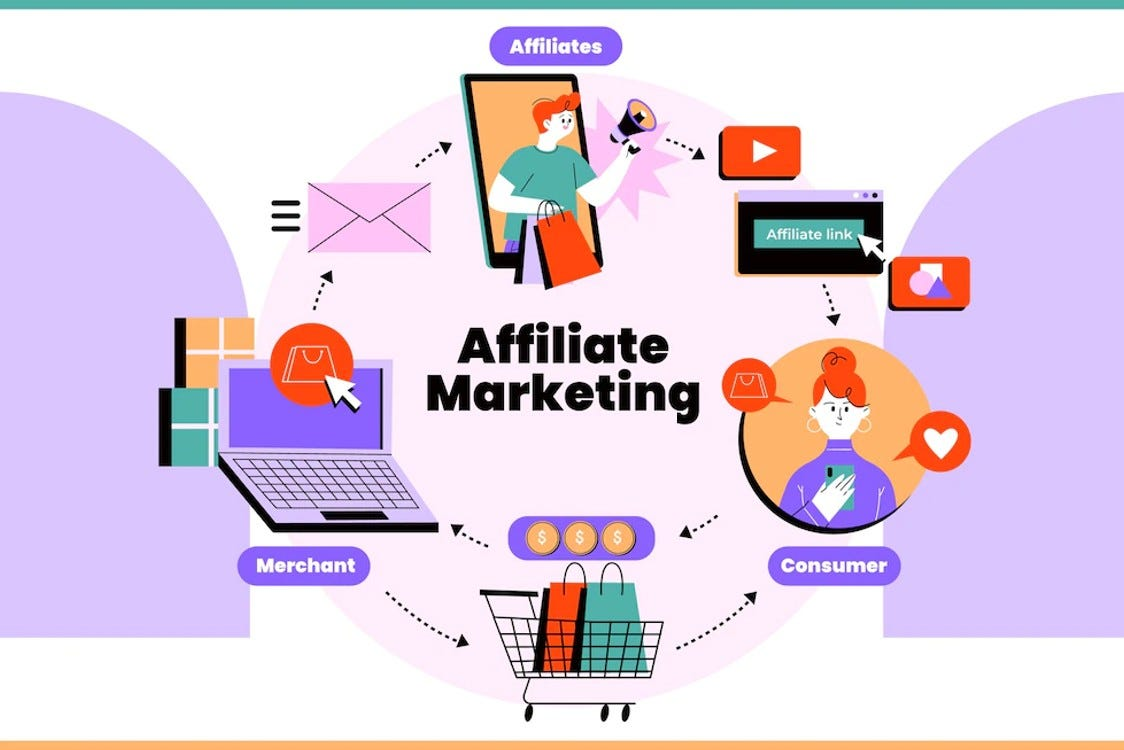
Affiliate marketing programs are often compared to referral programs. The main difference between the two is that referrals are meant to be actual clients, whereas affiliates are usually third-party companies or individuals who may have their own product. Likewise, referral rewards may come as bonuses or discounts, whereas affiliate payouts always come as money.
That said, affiliate and referral marketing perfectly synergize. Most advertisers run both affiliate and referral marketing programs simultaneously to get the best of both worlds.
How To Start Affiliate Marketing
As technologies develop and trends replace each other, you need to keep track of all new and effective ways when working out your affiliate marketing strategy.
Select Your Affiliates Wisely
Know exactly what to sell, then take the time to dig deep and find the right affiliates—those who have a following that would be interested in your products or services. For instance, if you’re selling books, collaborating with a car influencer would be a futile affiliate marketing strategy unless you promote books on “how to choose a good car.”
Check out the affiliate’s audience quantity and, more importantly, their customer engagement rates. Having a huge following doesn’t necessarily mean that a large percentage of them will convert into your clients. Ideally, you want affiliates who are already successful marketers and have a successful track record of collaborating with similar advertisers.
Optimize Your Website For Sales
In some niches, you can sell your products like hotcakes. For that, make the conversion process as smooth as possible:
- Ensure the content on your site clearly and simply explains exactly what your customers are looking for. Use videos, personalized emails, and targeted landing pages to spotlight your top products.
- Your site’s content, navigation, and structure must make it easy for users to find and buy what they want. Leads coming from affiliates want to buy from you, so make it quick and convenient for them.
Once your first affiliate marketing program is up and running, think about how to grow your affiliate networks so you don’t rely on a single traffic source.
How To Grow Your Affiliate Network
Select The Best Affiliate Marketing Platforms
The right affiliate platform can make scaling easy. The good news is that most digital marketing niches are abundant with advertising opportunities, including well-known programs like Amazon Associates or ShareASale.
As an advertiser, you’d like to join an affiliate network that contains as many relevant affiliates as possible while facilitating communication and providing free affiliate tracking software. The latter can help you manage your affiliate programs without extra spending on affiliate management.
At the same time, don’t forget that you are running this game. You’re the merchant, so you can write your own rules for your affiliate program, setting the commissions you’re willing to pay and other cooperation conditions. Of course, being too frugal usually means fewer affiliates on your program and fewer conversions.
Partner Up with Influencers
Influencer marketing is super efficient. With social media’s continuing growth, it’s not hard to find a relevant audience who can benefit from your products. The more closely the influencer’s niche matches your offering, the smoother and more effective your collaboration will be.

Since there’s an authentic bond between influencers and their followers, it is easier to persuade people to trust your brand by association. Even better, they don’t need to be celebrities. Most customers enjoy following ordinary people who create engaging content online.
On a similar note, you don’t necessarily need to splurge on big names. Instead, you can focus on niche influencers who are more affordable and provide high-intent leads that convert well. Remember, it’s not about the number of leads you generate but the ones you convert.
Nurture Brand-to-Brand Relationship
Brand-to-brand collaborations can help you acquire leads faster. Here, the same principles apply: seek out brands whose target audience would be interested in what you offer and vice versa. Make sure the partnership is mutually beneficial.
For instance, by blending Timberland’s rugged boots with Louis Vuitton’s luxury design, this collaboration captivates both high-fashion enthusiasts and street-style fans, showcasing the impact of uniting distinct brand identities.

Track Affiliate Marketing Links
Affiliate link tracking is the cornerstone of affiliate partnerships, allowing you to objectively assess your affiliates, compensate them fairly, and improve over time. For marketers, affiliate link clicks are one of the top metrics in affiliate marketing.
A trackable affiliate link ties a specific traffic source—an ad, banner, landing page, etc.— to a particular lead, enabling advertisers to pay for the promotion according to the affiliate agreement (pay per click, pay per call, pay per lead, pay per sale, etc.). Each affiliate link includes a unique URL with the affiliate’s ID—like “merchantID=XXX” — so advertisers can identify which affiliate brought in which customers.
Here are some benefits of affiliate link tracking:
| Actionable insights | Metrics like clicks, conversions, and ROI provide the insights you need to boost the profitability of your affiliate marketing, explore new markets with less risk, and enhance the customer journey, delivering exactly what your leads are after. |
| Omnichannel reach | No matter where your affiliate places links, they can be tracked to unlock key insights across social media, Google Ads, and other affiliate marketing channels. |
| Accurate payments | Tracking affiliate links ensures all payouts are spot-on and timely, reinforcing your reputation as a trustworthy advertiser. |
Automated link tracking will boost your ROI, improve the customer journey, and position you as a top-tier partner. It will also save you time and money, freeing up resources for other strategic business moves.
So Is Affiliate Marketing Worth it?
Absolutely. Affiliate marketing is a goldmine for business owners looking to get the most out of their advertising campaigns. It boosts business promotions, drives sales, and builds lasting relationships with people who believe in your brand.
If you’re ready to launch a business affiliate program that can catapult your growth, consider using the affiliate marketing tips we’ve mentioned above. Furthermore, try to harness the power of affiliate marketing programs that give you complete control and fit your unique needs.