Technology is changing faster than ever before. For marketers, this creates both an opportunity and a challenge.
The opportunity? It is now easier than ever to send the right message to the right person at exactly the right time.
The challenge? Marketing has become incredibly complex. Businesses struggle with complicated tech tools, scattered data, confusing reports, too many channels, and disagreements over what basic marketing terms actually mean.
Two terms that often create confusion are multichannel marketing and omnichannel marketing. Many marketers use these words interchangeably but they are not the same thing.
Understanding the real difference between multichannel and omnichannel marketing can completely change the way you think about your marketing strategy. More importantly, it can help you finally deliver what marketing has always promised: the right message, to the right person, at the right time.
Omnichannel vs Multichannel Quick Comparison
| Feature | Omnichannel Marketing | Multichannel Marketing |
|---|---|---|
| Focus | Customer experience | Product promotion |
| Channel Connection | All channels connected | Channels work separately |
| Personalization | Highly personalized | Limited personalization |
| Customer Journey | Smooth and connected | Different on each platform |
| Data Usage | Unified customer data | Separate channel data |
| Flexibility | Less flexible | More flexible |
| Setup | Complex setup | Easy setup |
| Cost | Higher cost | Lower cost |
| Team Size | Larger teams needed | Small teams can manage |
| Best For | Long-term customer loyalty | Fast marketing and quick reach |
| Example | Connected experience across all platforms | Separate campaigns on different platforms |
What Is Omnichannel Marketing?
Omnichannel marketing is when a business integrates multiple channels to create a seamless purchasing experience for its customers. The emphasis is on quality no matter where, when, or how the customer interacts with your brand.
Here’s the difference that matters: omnichannel starts with the customer and works backward. What does this customer need? Where are they? What have they done before? When should we reach them? Which channel makes sense for them right now?
Benefits of omnichannel marketing
1. Reach More Customers
Using multiple platforms helps you connect with more people instead of depending on just one channel. Some users prefer email, while others spend more time on Instagram, YouTube, or Google Search. By using different channels together, your business can reach a much larger audience.
For example, an online fitness brand was reaching around 5,000 users through email marketing alone. After adding Facebook ads and YouTube content, the brand expanded its reach to nearly 14,000 users and increased monthly revenue significantly.
2. Find Which Channel Works Best
Multichannel marketing allows businesses to test different platforms and understand which one gives the best results.
Different industries perform better on different platforms. For example:
- LinkedIn works well for B2B companies
- Instagram performs better for fashion brands
- Google Shopping is strong for ecommerce stores
- Email marketing works well for repeat customers
Testing helps businesses focus more on platforms that generate better conversions and revenue.
3. Faster Results and Early Revenue
One major advantage of multichannel marketing is that businesses can start getting results quickly.
Email campaigns can bring sales from existing customers almost immediately, while social media ads and organic content start driving traffic within days or weeks.
For example, a new product launch used email marketing, Facebook ads, and Instagram promotions together. This helped the business generate strong sales during the first week itself.
4. Better Product-Focused Marketing
Multichannel marketing focuses more on helping customers discover and purchase products quickly.
Many users simply want to see a product, understand its value, and buy it without going through a complicated customer journey.
For example, an Amazon seller used:
- Amazon listings
- Email marketing
- Facebook retargeting
- Google Shopping ads
Even without expensive systems, the business generated strong annual revenue with a small team.
5. Lower Marketing Costs
Another major benefit is affordability.
Businesses do not need expensive software or large technical teams to start multichannel marketing. Basic tools like email platforms, ad managers, social media schedulers, and analytics tools are often enough.
Compared to omnichannel systems that can cost thousands of dollars yearly, multichannel marketing is much more budget-friendly.
6. Faster Campaign Launches
Multichannel marketing helps businesses launch campaigns quickly.
Instead of spending weeks building complex automation systems, companies can create ads, emails, and social media promotions within a short time.
This is especially useful for:
- seasonal sales
- trending topics
- new product launches
- limited-time offers
For example a fashion brand promoting a summer collection can quickly launch campaigns across multiple platforms and start reaching customers immediately.
What Is Multichannel Marketing?
Multichannel marketing strategy is the use of multiple independent channels to reach customers, each with their own strategy. This means you might have different promotions on each channel. So cross-channel promotions are less common and so is consistency across channels.
Here’s the key part: in multichannel, each channel runs as its own mini-campaign. Your email team sends promotions. Your social team runs ads. Your website team optimizes product pages. They’re not necessarily talking to each other.
Benefits of Multichannel marketing
1. Higher Customer Lifetime Value
Omnichannel marketing helps businesses create a smooth and personalized experience across different platforms. Because of this, customers usually buy more often and spend more money over time.
For example, a normal multichannel customer may purchase one product and never return. But with omnichannel marketing, the customer receives personalized recommendations, reminder emails, special offers, and follow-up messages. This keeps them engaged with the brand for a longer time.
A retail company found that omnichannel customers generated much higher lifetime value compared to regular multichannel customers because they kept returning for repeat purchases.
2. Better Customer Retention
Customers are more likely to stay loyal when they receive consistent and personalized experiences across all channels.
Omnichannel marketing helps businesses reduce customer loss by improving communication and engagement.
For example, a SaaS company improved customer retention by using personalized emails, onboarding support, and targeted follow-up messages. As a result, fewer customers stopped using the service, which increased overall profit.
3. Personalized Experience at Scale
Omnichannel marketing allows businesses to show different content to different users automatically.
Instead of sending the same message to everyone, brands can personalize offers based on customer behavior, interests, and purchase history.
For example:
- loyal customers can receive VIP offers
- inactive users can receive discount reminders
- new customers can receive beginner recommendations
A digital company improved email open rates, clicks, and conversions significantly after introducing personalized omnichannel campaigns.
4. Higher Conversion Rates
Omnichannel marketing often improves conversion rates throughout the customer journey.
Customers receive more relevant messages at the right time and through the platform they prefer. This reduces confusion and improves the buying experience.
For example, an ecommerce store improved:
- ad click rates
- add-to-cart rates
- final purchase rates
by using personalized recommendations and abandoned cart reminder emails.
The result was a much higher overall conversion rate compared to regular multichannel campaigns.
5. Lower Customer Acquisition Cost
Omnichannel marketing can reduce customer acquisition costs because businesses target the right audience more efficiently.
Instead of wasting budget on broad campaigns, brands can focus on users who are more likely to convert.
For example, a software company improved customer targeting through omnichannel optimization. With the same advertising budget, the company acquired more customers and reduced overall acquisition costs.
This makes marketing campaigns more profitable over time.
6. Improved Marketing Efficiency
Omnichannel marketing helps businesses use their marketing budget more effectively.
Instead of splitting budget equally across all channels, companies can invest more in platforms that perform better for specific customer groups.
For example:
- business customers may respond better to email campaigns
- leisure customers may engage more on social media
By adjusting budgets based on performance, businesses can increase conversions and improve overall marketing efficiency without increasing total spending.
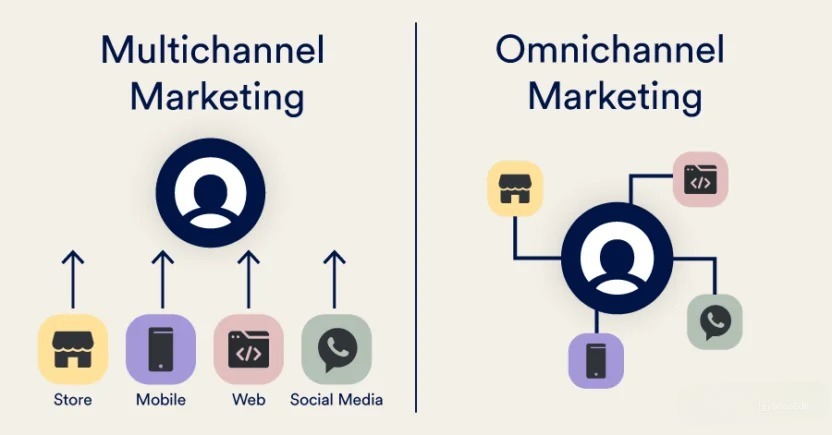
The 5 Core Differences That Actually Matter
1. Customer vs. Channel Focus
Multichannel asks: “Which channels should we use?”
Omnichannel asks: “How does this customer want to interact with us?”
This distinction cascades through everything. Multichannel optimizes each channel independently. Omnichannel optimizes the customer journey.
I’ve seen brands with 10 active channels fail at multichannel because they’re not coordinated. I’ve seen brands with 3 channels succeed at omnichannel because every channel connects.
2. Integration Level
Multichannel: Channels are independent. Your email platform doesn’t know what happened on your website. Your social ads don’t know about previous purchases.
Omnichannel: Channels share a single customer database. Everything is connected. When something happens in one channel, all other channels know about it.
Real example: Customer browses products on your mobile app, doesn’t buy. Three hours later, an omnichannel system knows this and decides whether email, SMS, or a push notification is most likely to work based on this specific customer’s behavior. Multichannel just sends whatever channel has something to send.
3. Personalization Depth
Multichannel: You might personalize within a channel (segment your email list, for example). But offers and messaging often vary between channels.
Omnichannel: Personalization is customer-level. The same customer sees consistent offers across every channel, but every customer sees different offers.
This is the difference between “here’s 15% off for everyone” and “based on your browsing history and purchase patterns, here’s the specific discount that matters to you.”
4. Operational Approach
Multichannel: Each team manages their own campaigns. Marketing handles email. Social media team handles Instagram and TikTok. Paid search handles Google Ads. They coordinate loosely.
Omnichannel: Campaigns are orchestrated across teams. One person (or small team) owns the customer journey. Individual channels execute that vision.
The multichannel approach feels more flexible until you realize it creates chaos. The omnichannel approach feels rigid until you realize it’s actually freeing.
5. Scalability and Automation
Multichannel: You can automate within channels (email sequences, social posting calendars). But coordinating automation across channels requires manual work.
Omnichannel: Once set up, the system orchestrates everything. A customer enters your ecosystem, and predefined journeys activate automatically based on their behavior.
This is why omnichannel brands can scale without adding proportional staff.
How to Choose the Right Marketing Strategy
Step 1 – Understand Your Current Situation
Before choosing between multichannel and omnichannel marketing, businesses should first understand their real situation honestly instead of selecting a strategy just because it sounds advanced or popular.
The first thing to check is budget. Businesses should calculate how much money they can actually spend on marketing tools, software, staff, automation, and setup costs during the year. Smaller businesses with limited budgets usually find multichannel marketing easier and more affordable, while larger companies with bigger budgets may be able to handle omnichannel systems.
Another important factor is customer lifetime value. Businesses should understand how much money a customer usually spends over time. If customer spending is lower, multichannel marketing may be more practical and cost-effective.
Step 2 – Understand the Customer Journey
Businesses should clearly understand how customers interact with the brand from beginning to end. Many companies make decisions without properly understanding how customers actually discover, research, and purchase products.
The customer journey usually starts with awareness and understanding your ecommerce funnel at each stage makes this clearer. This is where customers first discover the business through platforms like Google Search, Instagram ads, YouTube videos, referrals, or social media posts.
After that comes the research stage, where customers visit websites, compare products, read reviews, or subscribe to emails before making a decision.
The next step is the purchase stage, where customers finally buy through a website, app, online store, or physical location.
Step 3 – Review Existing Marketing Channels
Before adding more platforms or building advanced systems, businesses should first analyze which marketing channels are already working well.
Every existing channel should be reviewed carefully, including:
- advertising costs
- customer reach
- conversion rates
- customer acquisition cost
- revenue generated
- overall return on investment
Businesses should also evaluate the people managing these channels. Sometimes one strong channel performs poorly simply because the team lacks enough time, tools, or resources.
Step 4 – Compare Both Strategies Realistically
After understanding the business situation and current marketing performance, businesses should compare multichannel and omnichannel marketing realistically instead of emotionally.
Multichannel marketing usually works better for businesses that:
- have smaller budgets
- need faster campaign launches
- want flexibility
- have smaller teams
- prefer simpler systems
It allows businesses to run campaigns across multiple platforms without needing every system to stay fully connected.
Step 5 – Make the Final Decision
After reviewing all important factors, businesses should confidently choose the strategy that fits their goals, team size, budget, and customer behavior best.
The decision should not be based only on trends or what larger companies are doing. A strategy should match the company’s actual resources and long-term goals.
How to Implement the Right Marketing Strategy
Step 1 – Set Clear Marketing Goals
Before implementing any strategy, businesses should first decide what they actually want to achieve. A good starting point is understanding the 5 Ps of marketing Product, Price, Place, Promotion, and People as they help shape clearer and more focused goals.
Some businesses focus on:
- increasing sales
- generating leads
- improving customer retention
- building brand awareness
- growing website traffic
Clear goals help businesses choose the right marketing channels, content, and campaigns. Without proper goals, marketing efforts often become inconsistent and difficult to measure.
For example, a business focused on fast sales may prioritize paid ads and email campaigns, while a brand focused on long-term growth may invest more in SEO and customer retention.
Step 2 – Choose the Right Marketing Channels
After setting goals, businesses should select the channels that match their audience and business type.
Different platforms work better for different industries. For example:
- Instagram works well for fashion and lifestyle brands
- LinkedIn performs better for B2B companies
- Google Search works strongly for high-intent buyers
- Email marketing helps retain existing customers
Businesses should avoid trying every platform at once. Instead, they should focus on a few strong channels and manage them properly.
Choosing the right channels improves marketing efficiency and reduces wasted budget.
Step 3 – Create Consistent Content and Messaging
Once channels are selected, businesses should create content that matches their brand message and customer expectations.
This includes:
- advertisements
- social media posts
- emails
- landing pages
- product descriptions
The messaging should stay clear and consistent across all platforms so customers do not become confused.
For example, if a brand promotes affordability in ads but highlights luxury positioning on the website, customers may lose trust.
Consistent communication improves brand recognition and customer confidence.
Step 4 – Use Customer Data and Performance Tracking
Businesses should continuously track how customers interact with campaigns and platforms.
Important metrics include:
- website traffic
- click-through rates
- conversions
- customer engagement
- return on investment
- customer retention
Tracking performance helps businesses understand:
- which channels generate the best results
- where customers leave the buying process
- which campaigns need improvement
For omnichannel marketing, combining customer data from multiple platforms helps create more personalized experiences.
For multichannel marketing, performance tracking helps optimize each channel independently.
Step 5 – Optimize and Improve Regularly
Marketing strategies should never remain completely static. Businesses should regularly improve campaigns based on performance data and customer behavior.
This may include:
- testing different advertisements
- improving email campaigns
- updating landing pages
- changing audience targeting
- increasing budget for high-performing channels
Regular optimization helps businesses improve conversions, reduce wasted spending, and adapt to changing customer behavior over time.
Successful marketing strategies usually grow through continuous testing, learning, and improvement instead of one-time setup.
Conclusion
Multichannel marketing and omnichannel marketing are both powerful strategies, but they serve different purposes. Multichannel helps businesses reach more customers quickly across different platforms, while omnichannel focuses on creating a seamless and personalized experience that builds long-term loyalty. The right choice depends on your budget, team size, and business goals.
Your marketing strategy defines how customers experience your brand at every touchpoint. Choose multichannel if you need faster results with lower investment, or go with omnichannel if long-term customer retention and personalization are your priority. Track your results, keep optimizing, and let your business growth guide your next move.