Omnichannel ecommerce is a way to connect every shopping channel so customers get one smooth experience from start to finish. Today, people do not shop in one place. They move between apps, websites, and stores before they decide. Someone might first see a product on social media. Then they check details on a website. Later, they buy it in a store or on their phone. This has compelled firms to connect all their touch points.
What is omnichannel ecommerce?
Omnichannel ecommerce is a means for businesses to integrate all their sales channels so clients get the same experience wherever they are. It links online and offline touchpoints so consumers can navigate between them without misunderstanding or breaks.
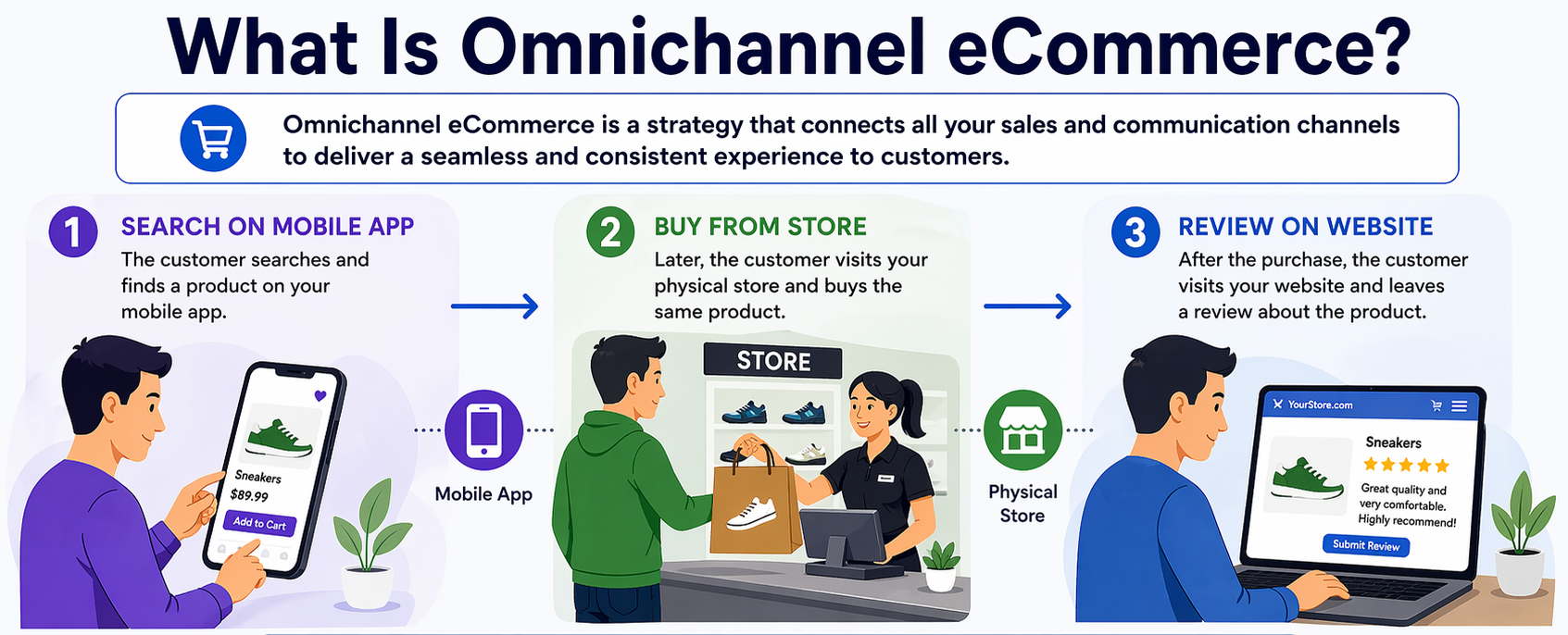
In omnichannel commerce – every channel works together. This includes your:
- website
- mobile app
- social media
- emails
- physical stores
Instead of treating each channel separately, businesses link them so customer data, preferences and actions stay connected.
Omnichannel ecommerce – Key highlights
- 91% of shoppers use several channels and many pass through about 11 touchpoints before they make a purchase.
- Companies with good omnichannel engagement experience around 9.5% yearly revenue growth.
- Omnichannel clients spend roughly 16% more in every order. And potentially generate up to 30% more lifetime value.
- Campaigns using 3+ channels can drive purchase rates 287% higher than single channel campaigns.
- Strong omnichannel tactics can increase client retention up to 89%.
- Shoppers who shop omnichannel are 1.7x more likely to make repeat purchases.
How omnichannel ecommerce works?
Omnichannel ecommerce brings together all your sales and communication channels into a single platform. Here is how it works – step by step:
1. Customer data is collected across channels – When a customer browses your website, uses your app, or visits your store, their actions are tracked. This includes what they view, search, and buy.
2. Data is stored in one place – All this data is stored in a central system. This helps businesses understand customer behavior across different channels.
3. Channels are connected – Your website, app, social media, email, and store systems are linked, allowing for better cross channel coordination. This ensures that updates like cart items, preferences, and order history stay the same everywhere.
4. Experience is consistent – Customers can switch between channels without starting over. For example they can add a product to cart on mobile and complete the purchase on desktop or in store.
5. Personalization in real time – Customer data will allow companies to deliver relevant products and messaging across channels.
Difference between omnichannel and multichannel
Many businesses sell on more than one channel, but the real difference comes from how these channels are connected and how the customer journey flows across them.
If you look at it more closely, the gap between multichannel and omnichannel becomes much easier to understand in real scenarios.
Let’s understand the difference between omnichannel and multichannel clearly with the help of a table.
| Feature | Multichannel | Omnichannel |
| Channels | Uses many channels | Uses many channels |
| Connection | Channels work separately | Channels work together |
| Experience | Feels separate on each channel | Feels like one smooth journey |
| Customer journey | Starts fresh on each channel | Continues across channels |
| Personalization | Basic and limited | Based on full customer data |
| Communication | Different on each channel | Same message everywhere |
| Example | Website and store are not linked | Website and store are connected |
What are the benefits of omnichannel ecommerce?
Omnichannel ecommerce allows companies to improve the buying experience and at the same time – increase sales and operations. When all channels work together – customers find it easier to interact with your brand and complete their purchase. A seamless ecommerce checkout process plays a critical role in this experience by reducing friction, maintaining consistency across channels, and helping customers move from product discovery to purchase with minimal effort.
Consistent brand experience
With omnichannel commerce – customers see the same message and experience across every platform. Whether they visit your website, app or store – everything feels familiar and connected. This builds trust and makes your brand easier to remember.
Better customer insights
Omnichannel commerce brings all customer data into one place. You can track what people view, click and buy across channels. This gives you a complete view of the customer journey instead of scattered data from different platforms. A Harvard Business Review study found that around 73% of shoppers in the world use multiple channels for shopping. This makes this unified view very important.
Personalized customer experience
When you understand customer behavior – you can show products and offers that match their interests. This results in higher engagement and conversions. Omnichannel customers can generate up to 30% more lifetime value than single channel shoppers.
Increased sales and customer loyalty
Customers are more likely to finish the transaction when they can simply switch between channels. The experience is convenient and they come back more often too. In fact, firms with robust omnichannel strategy may retain 89% of their customers. This directly improves long term revenue.
Improved operational efficiency
Omnichannel ecommerce also improves how businesses manage operations, helping improve ecommerce Marketing strategy performs across different channels. Inventory updates stay in sync across channels – which reduces errors and stock issues. It also reduces fulfilment costs by enhancing order management and decreasing delays.
Faster buying decisions
Customers make faster judgements when they can see product details, reviews and availability across channels. They do not need to seek again on other platforms.
Read More: How to build a smooth omnichannel shopping experience
Omnichannel ecommerce challenges
Omnichannel ecommerce has a number of advantages but it is not without its obstacles. To seamlessly integrate all channels – businesses require the correct technologies and processes. Without proper setup – the experience can feel broken instead of connected. Here are the common omnichannel ecommerce challenges:
Inventory synchronization issues
Managing stock between online and offline can be tricky. A product may be listed as in stock online yet out of stock in store. This results in a poor customer experience and might lead to lost sales.
The solution is real time inventory updates across all channels.
Data silos across channels
Most organizations have client data in separate platforms. For example, internet data, app data, in-store data, etc. may not be linked. This makes it challenging to grasp the entire client journey. Without a shared perspective – personalization and targeting are limited.
Technology and infrastructure limitations
Older systems are typically not designed to enable omnichannel ecommerce. They can’t readily link disparate systems or manage real-time upgrades. To offer a connected experience – businesses may have to improve their systems or buy new tools.
Complex attribution tracking
Customers frequently engage with many channels before buying. They may see an ad – go to the website and then buy in the store. It is hard to trace which channel drove the user to buy at the end of the day. This can make performance measurement and marketing optimization more difficult.
Finding the right partners
Omnichannel commerce depends on multiple partners such as:
- logistics providers
- payment systems
- technology platforms
Choosing the right partners is important. Poor integrations or delays in delivery can impact the client experience overall.
How to build an omnichannel ecommerce strategy (step-by-step)
To build an omnichannel ecommerce strategy – your channels must work together. The steps below will help you connect them and improve the customer journey.
1. Understand your customer
Start by learning how your customers shop. Look at where they spend time and how they move between channels.
Ask questions like:
- Do they start on mobile or desktop?
- Do they visit stores before buying?
- Which channels drive most sales?
Use tools like website analytics, surveys and customer feedback to gather this data. The more you know – the easier it is to build a strategy that fits real behavior.
2. Map the customer journey
Once you understand your audience – you need to see how they interact with your brand across different stages. This helps you identify gaps and improve the flow.
- Break the journey into stages: awareness, consideration, purchase, post-purchase
- List all touchpoints at each stage
- Identify where customers switch channels
- Find friction points and areas where users drop off
3. Choose the right channels
You do not need to be everywhere. Focus on the channels your customers actually use as part of a broader ecommerce solutions approach. For most businesses – this includes:
- Website
- Social media
- Mobile app
- Physical store (if available)
Start with 2 to 3 strong channels and connect them well. A few connected channels work better than many disconnected ones.
4. Integrate technology and data
This is the core of your omnichannel ecommerce strategy. All your systems must work together. You need:
- A CRM to manage customer data
- A CDP (Customer Data Platform) to unify data across channels
- Marketing automation tools to run campaigns Make sure
- Customer data stays the same across channels
- Inventory updates in real time
- Orders sync across systems
5. Personalize across touchpoints
Once your data is connected – use it to improve the customer experience. You can:
- Show product recommendations based on browsing history
- Send emails based on past purchases
- Offer discounts based on behavior
For example: if a customer views a product on your website, you can remind them through email or show the same product on social ads.
This makes the experience more relevant and increases conversions.
6. Measure and optimize
Track how customers move across channels and where they convert. Focus on:
- Which channels drive sales
- Where customers drop off
- Which campaigns perform best
Use cross-channel tracking to see the entire journey. Then reinforce what is working and strengthen the weak spots. Test your plan and update it over time.
Examples of omnichannel commerce
Here are some examples of brands that use omnichannel ecommerce strategy to offer better customer experience.
Nike
Nike is a great example of omnichannel commerce. The brand combines its app, online and stores for a seamless experience. If the product is not available in-store – they can order it online without starting over. Nike also uses its membership program and app activity to offer personalized recommendations across channels. This keeps the customer journey connected from start to finish.
- browse products like the Nike Air Max on the app
- check if they are available in a nearby store
- reserve them for pickup
Starbucks
Starbucks integrates its mobile app, loyalty program, and physical stores into one system. Customers may order ahead, pay through the app, get rewards, and pick up in-store without waiting. This provides a fast and uniform experience across channels.
Sephora (AI-powered omnichannel)
Sephora employs AI to improve its omnichannel experience. On the app or website, customers can receive individualized product recommendations through features such as skin scanning and AI conversation. The same settings are applied in-store too – so the experience is consistent across channels.
Walmart
Walmart links its website, app and real locations to give shoppers a flexible experience. Customers can order online and select to pick up, deliver or purchase in store. Features like real-time inventory, curbside pickup and in-store app navigation create a seamless journey across channels.
Wrapping up
Omnichannel ecommerce combines all channels for a seamless experience. It increases consumer happiness and helps to achieve better sales results. With the correct strategy and execution – you can create a linked journey that matches modern expectations and adjusts to customer behavior as it changes.